


Medicare plays an important role in retirement planning because it affects healthcare access, monthly expenses, prescription coverage, and how your broader income plan comes together. For most people, Medicare eligibility begins at age 65, though some individuals qualify earlier because of a disability, End-Stage Renal Disease, or ALS.
This guide walks through how to confirm Medicare eligibility, review enrollment timing, compare coverage paths, coordinate other benefits, and avoid common penalties. The goal is not just to know whether you are eligible, but to make sure your coverage fits the way you live in retirement.
Key Takeaways
Confirming Medicare eligibility is an important retirement planning step, especially if you are still working, recently retired, moving, traveling, or coordinating more than one type of coverage. A few well-timed checks can help you understand what applies to your situation before coverage decisions become more difficult to change.
Medicare generally begins at age 65, with earlier eligibility for certain disabilities or medical conditions.
Enrollment timing matters because late enrollment penalties can increase future premiums.
Existing coverage, including employer plans, retiree coverage, COBRA, VA benefits, or TRICARE, should be reviewed before delaying Medicare.
Medigap, Medicare Advantage, and Part D coverage each work differently.
Medicare should be reviewed alongside retirement income, taxes, travel, and long-term healthcare needs.
With that foundation in mind, here are the key areas to review as you confirm eligibility and coordinate coverage.
How Do You Confirm Medicare Eligibility and Enrollment Status?
The first step is to verify your Medicare eligibility and current enrollment status directly through Medicare or Social Security. Some people are enrolled automatically, while others need to sign up.
If you are receiving Social Security benefits before age 65, Medicare Part A and Part B may begin automatically when you turn 65. If you are not already receiving Social Security, you may need to enroll yourself through Social Security. The official SSA Medicare sign-up page explains how Part A and Part B enrollment works.
As you review your status, check:
Your Medicare eligibility date
Whether Part A and Part B are active
Whether you need Part D prescription drug coverage
Whether your current coverage affects Medicare timing
Whether your personal information and address are correct
This is also the time to gather basic documents, including your Social Security number, proof of age, citizenship or lawful residence documentation, and records of employer or retiree coverage.
How Does Existing Coverage Affect Medicare Enrollment?
Many retirees and late-career professionals still have other coverage when Medicare eligibility begins. That coverage may come from an employer plan, retiree medical plan, COBRA, VA benefits, or TRICARE. The important question is not only whether you have coverage, but whether that coverage allows you to delay Medicare without penalties or gaps.
COBRA deserves particular attention. Medicare’s official guidance on how COBRA works with Medicare explains that COBRA may pay only a small portion of covered services if you are eligible for Medicare but not enrolled.
Employer coverage can also vary based on whether the coverage is tied to active employment and how the plan coordinates with Medicare. Before declining or delaying Part B, confirm how your current coverage pays and whether it qualifies for a Special Enrollment Period.
Which Medicare Enrollment Windows Should Retirees Know?
Medicare decisions are tied to specific enrollment windows. Missing one can limit when coverage begins or increase future costs.
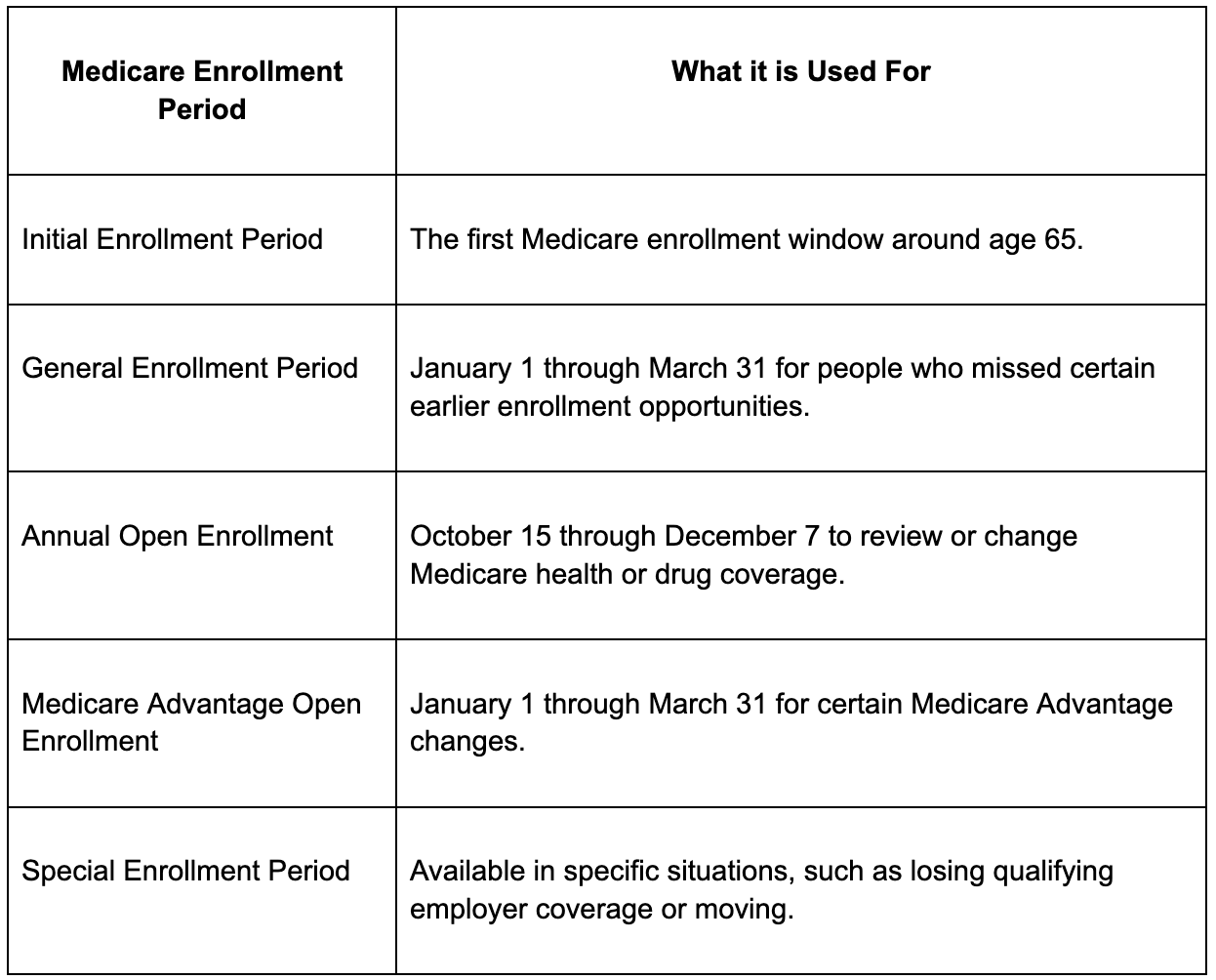
Medicare’s Open Enrollment page is the official source for annual timing and coverage-change rules. Medicare enrollment windows are more than calendar reminders. They are opportunities to review whether your coverage still fits your prescriptions, income, residence, and retirement plans, especially as your circumstances change over time.
How Should You Compare Original Medicare, Medigap, Medicare Advantage, and Part D?
Once eligibility and timing are clear, the next step is choosing how your coverage should be structured. The main paths are Original Medicare, often paired with a Medigap policy and Part D drug plan, or a Medicare Advantage plan.
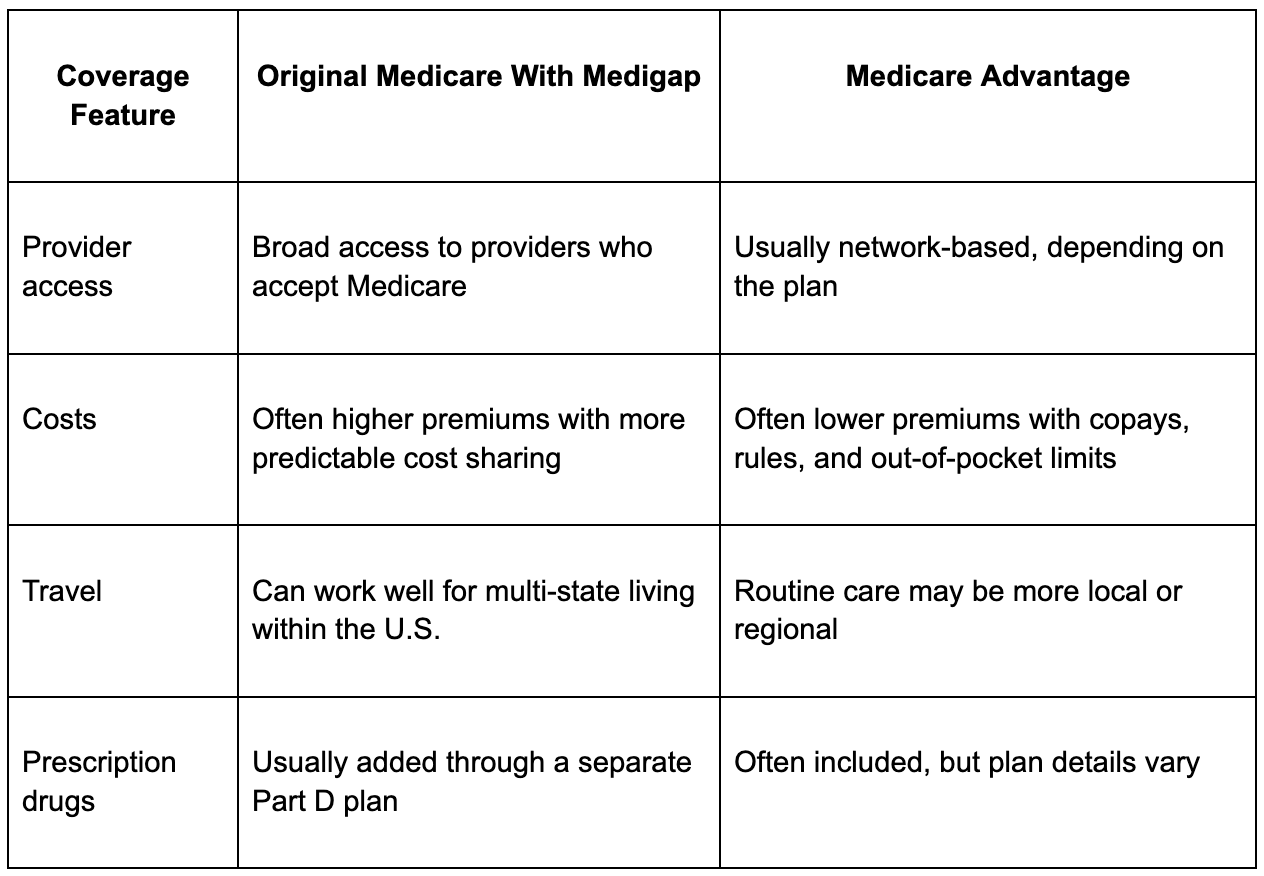
Medigap also has its own timing rules. Under federal law, the six-month Medigap Open Enrollment Period starts the first month you have Medicare Part B and are age 65 or older. Medicare’s official Medigap buying guidance explains this enrollment window in more detail.
Part D should not be overlooked, even if you take few medications presently. Medicare’s creditable prescription drug coverage guidance explains how prior drug coverage can affect late enrollment penalties.
How Can Medicare Costs Affect Your Retirement Income Plan?
Medicare is part of the retirement budget. Premiums, deductibles, copays, drug costs, supplemental coverage, and potential surcharges can all affect monthly cash flow.
Higher-income retirees may also face IRMAA, the Income-Related Monthly Adjustment Amount, which can increase Part B and Part D costs. If your income has decreased because of a qualifying life-changing event, Social Security’s official page on requesting a lower IRMAA explains how the adjustment request works.
This is where Medicare connects directly to retirement income planning. Large withdrawals, Roth conversions, business sales, deferred compensation payouts, or portfolio income may affect Medicare-related costs. Before making major income decisions, it can be helpful to understand how Medicare premiums and tax planning may interact.
What Medicare Issues Should Travelers and Snowbirds Review?
Lifestyle matters when choosing Medicare coverage. If you split time between states, travel often, or spend extended periods away from your primary residence, provider access and network rules should be reviewed carefully.
Original Medicare and Medicare Advantage differ in areas such as doctor choice, costs, coverage structure, and foreign travel considerations. Medicare’s official comparison of Original Medicare and Medicare Advantage can help you review those differences at a high level.
If you maintain more than one residence, review:
Whether your plan covers routine care where you spend time seasonally
Whether prescriptions are easy to fill in both locations
Whether a move could trigger a Special Enrollment Period
Whether emergency or urgent care rules differ when traveling
Whether foreign travel coverage should be addressed separately
These details are easier to check before travel begins than during a medical issue away from home.
What Medicare Eligibility Mistakes Should You Avoid?
The most common Medicare mistakes usually involve timing and assumptions. A retiree may assume COBRA allows Part B to be delayed, overlook Part D because prescriptions are minimal, or miss a Medigap window because Original Medicare is already active.
Late enrollment penalties are not always temporary. Medicare’s official guidance on avoiding late enrollment penalties explains how Part B and Part D penalties can apply.
Keep records of employer coverage, retiree coverage, COBRA notices, prescription drug creditable coverage letters, and communications with Medicare or Social Security. Documentation can be valuable if enrollment timing is ever questioned.
Frequently Asked Questions about Medicare Eligibility
These questions often come up as retirees confirm Medicare eligibility and evaluate coverage options.
Am I automatically enrolled in Medicare when I retire?
Not necessarily. Automatic enrollment often depends on whether you are already receiving Social Security benefits before age 65. If you are not, you may need to enroll yourself.
How do I officially confirm Medicare eligibility?
You can confirm eligibility through Medicare.gov or SSA.gov. Review your enrollment dates, Part A and Part B status, and whether additional coverage decisions are still needed.
Does Cobra let me delay medicare?
COBRA generally should not be treated the same as active employer coverage. If you are Medicare-eligible and rely on COBRA without enrolling in Medicare, you may face coverage gaps or penalties.
Do I need part D if I rarely take prescriptions?
Part D may still matter because future penalties can apply if you go too long without Medicare drug coverage or other creditable prescription coverage.
Should I review Medicare if I move to another state?
Yes. A move can affect available Medicare Advantage or Part D plans and may trigger a Special Enrollment Period. Review coverage before or soon after changing your primary residence.
Confirm Medicare Eligibility As Part of Your Retirement Plan
Medicare eligibility is more than an age-based milestone. It affects healthcare access, retirement income, taxes, travel, and the way your broader financial plan is coordinated. By confirming enrollment status, reviewing coverage windows, comparing plan structures, and checking how Medicare fits with your lifestyle, you can make more informed decisions about this important part of retirement. To review how Medicare fits into your retirement planning picture, contact the Wealth Partners to schedule a meeting with your financial professional.